Operations Console Real-estate development — investor relations 2026
One record for the investor side of a development business, and every other tool reads from it.
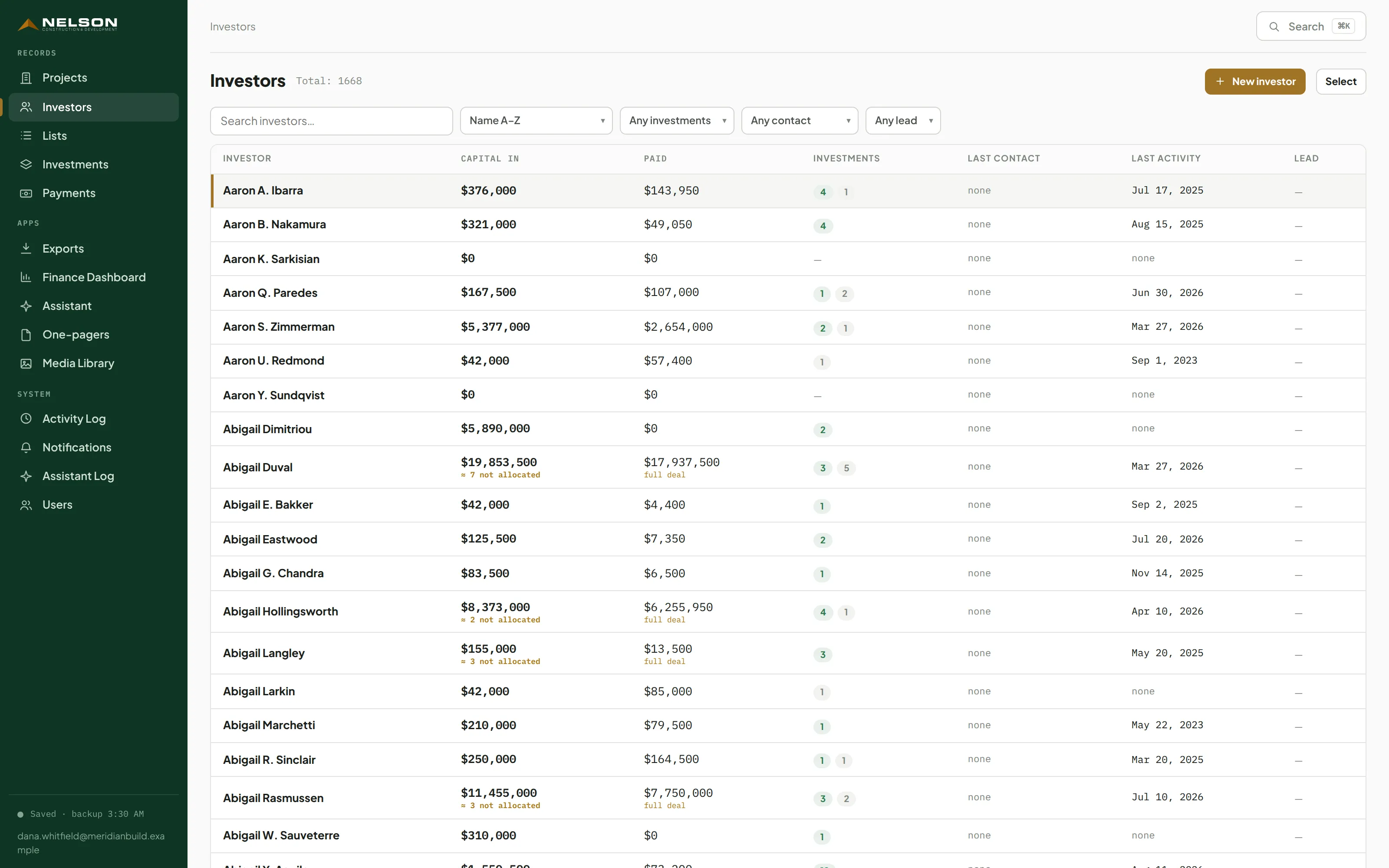
The system of record for the investor side of a development business — investors, investments, payments and conversations in one place. The other tools read from it rather than keeping their own copies.
The problem
The investor side of the business lived in four places at once: a spreadsheet, the inbox where the conversations happened, the folder of documents that went out, and what people remembered. None of them reconciled against the others, and every list of who to contact was assembled by hand.
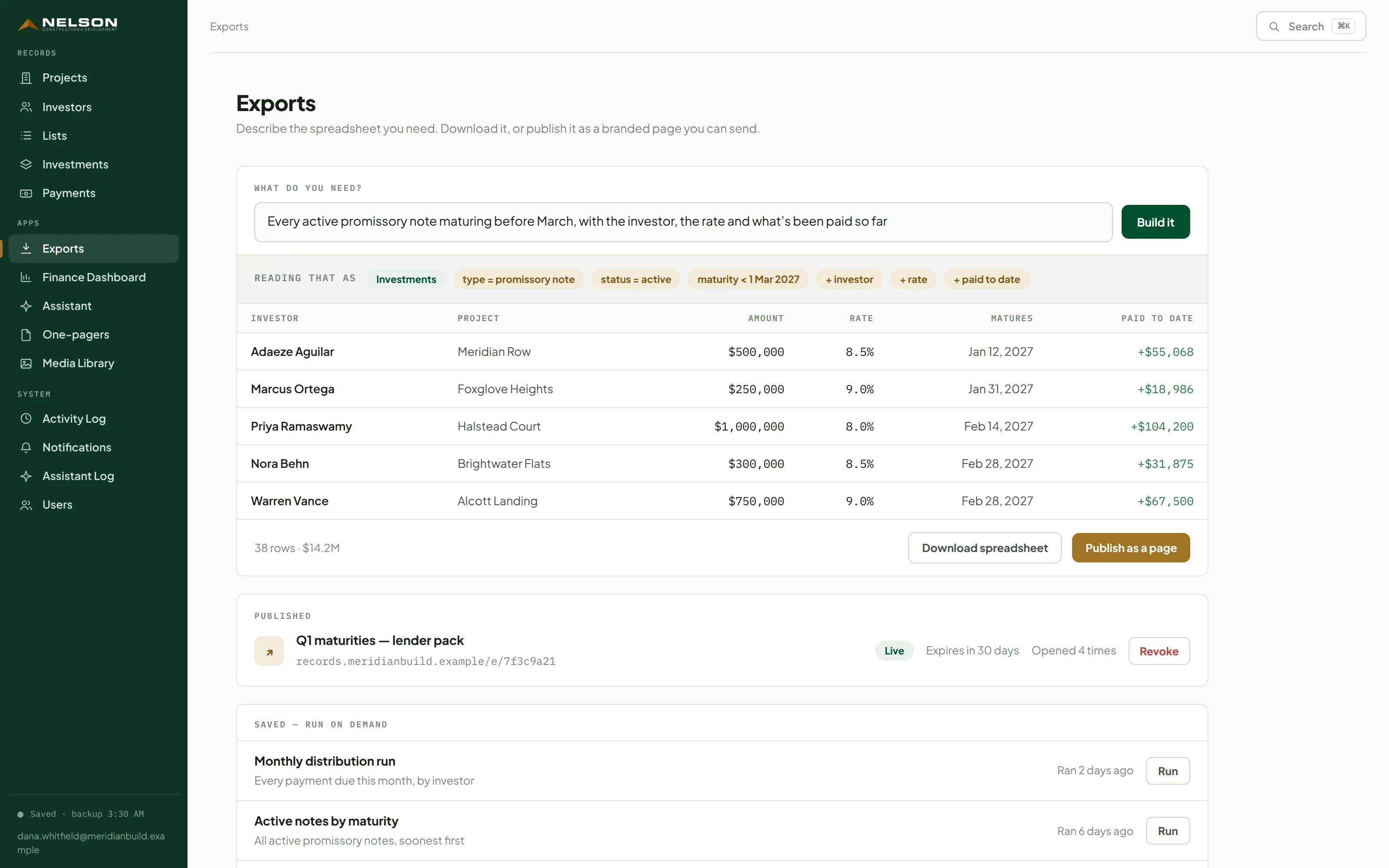
One record, and everything else reads from it
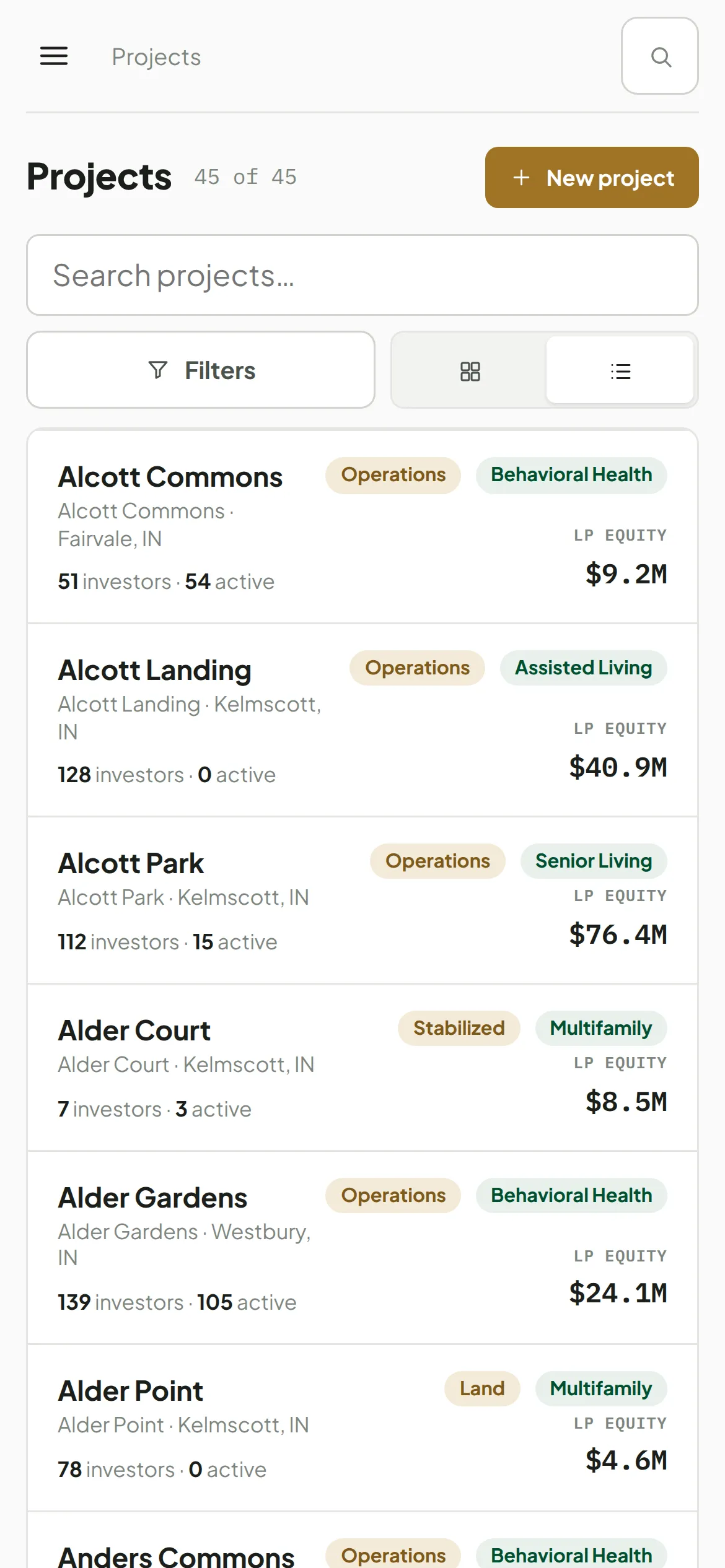
The Console holds the investor side of the business: every investor and entity, every active investment, every payment, and every conversation logged against the project it was about. Everything reads, nothing copies — the tablet lookup, the offering pages and the photography library behind them read this record directly, so there is no overnight sync to fall out of step.
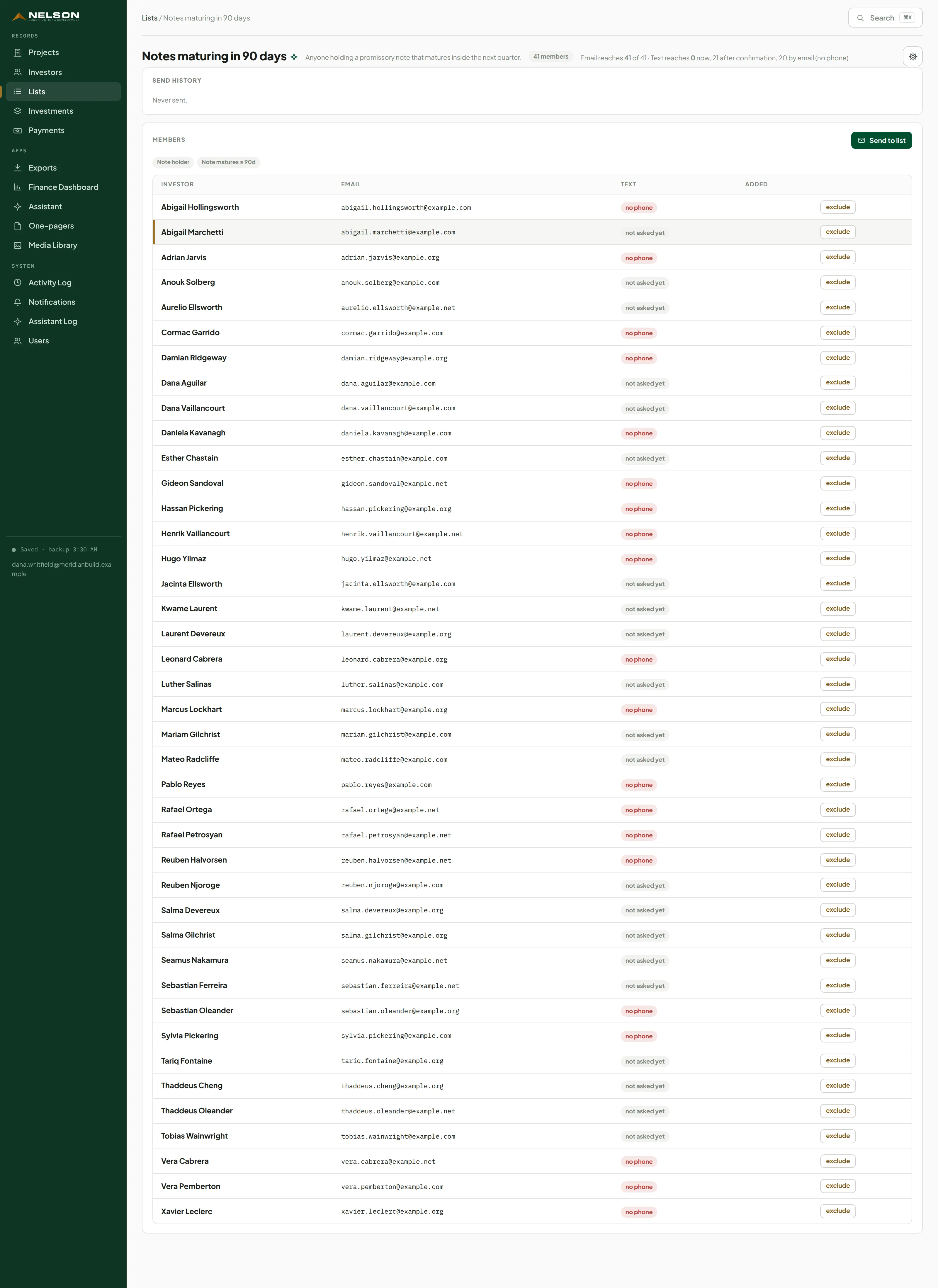
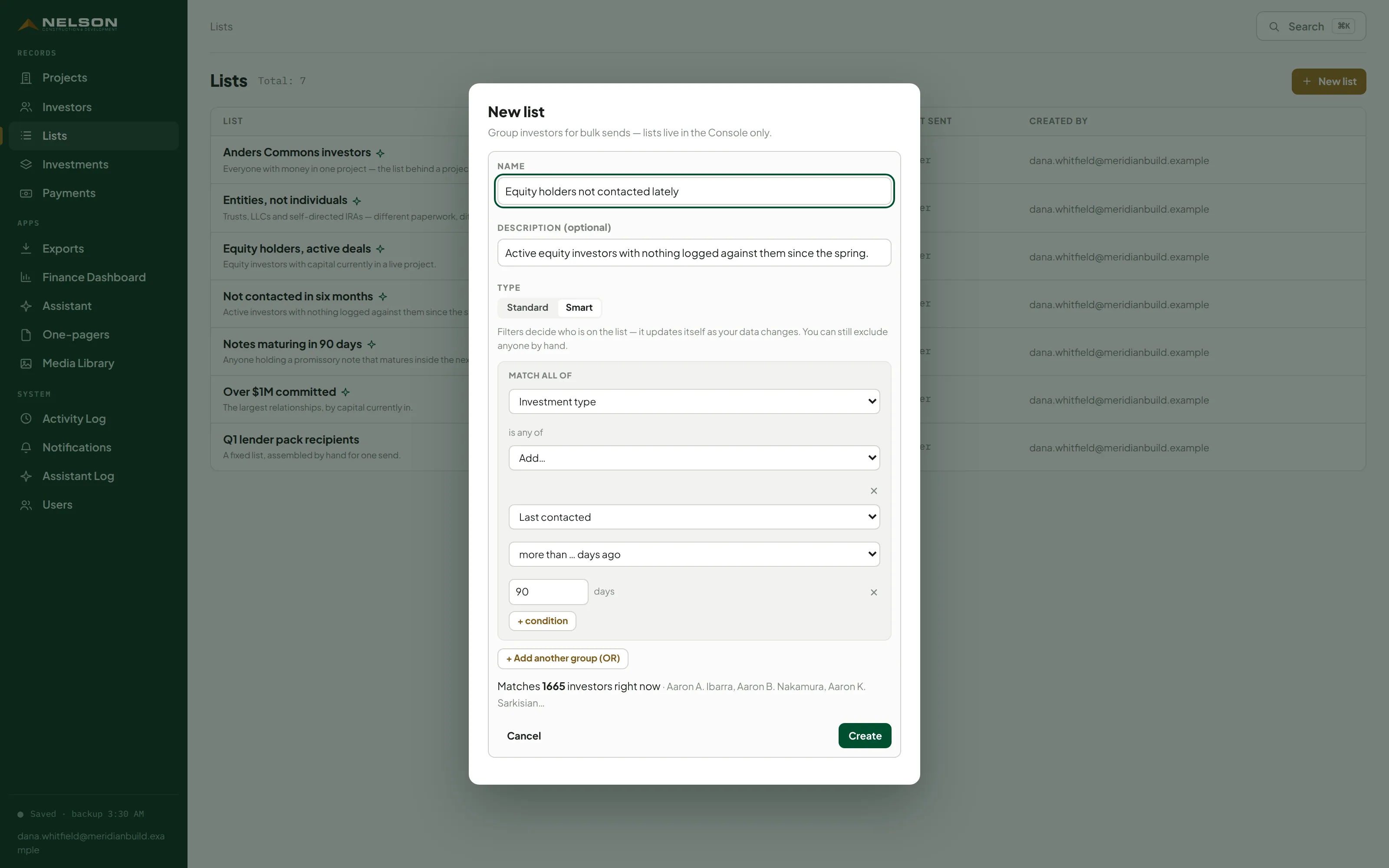
A list is a question, not a list of names
A hand-assembled audience is correct on the day it is made and decays from then on, with no signal that it has. So a list here is a saved question rather than saved rows — promissory notes maturing inside ninety days. Membership is worked out when the list is opened, then sent from the same screen, with what happened recorded per recipient.
The rest of it
- Questions in plain language. Ask what you would have asked a colleague; get back a sentence, the rows behind it, and the working.
- Reporting in a sentence. Describe the spreadsheet you want, correct how the request was read, then take it as a file or publish it as a branded page on a link that expires.
- Notice when something changes. Rules watch the record — a maturity approaching, a payment logged — and send word by email or text on the day it matters.
- Built for a phone. Not the desktop layout narrowed. One job: look somebody up, and log what was just said.
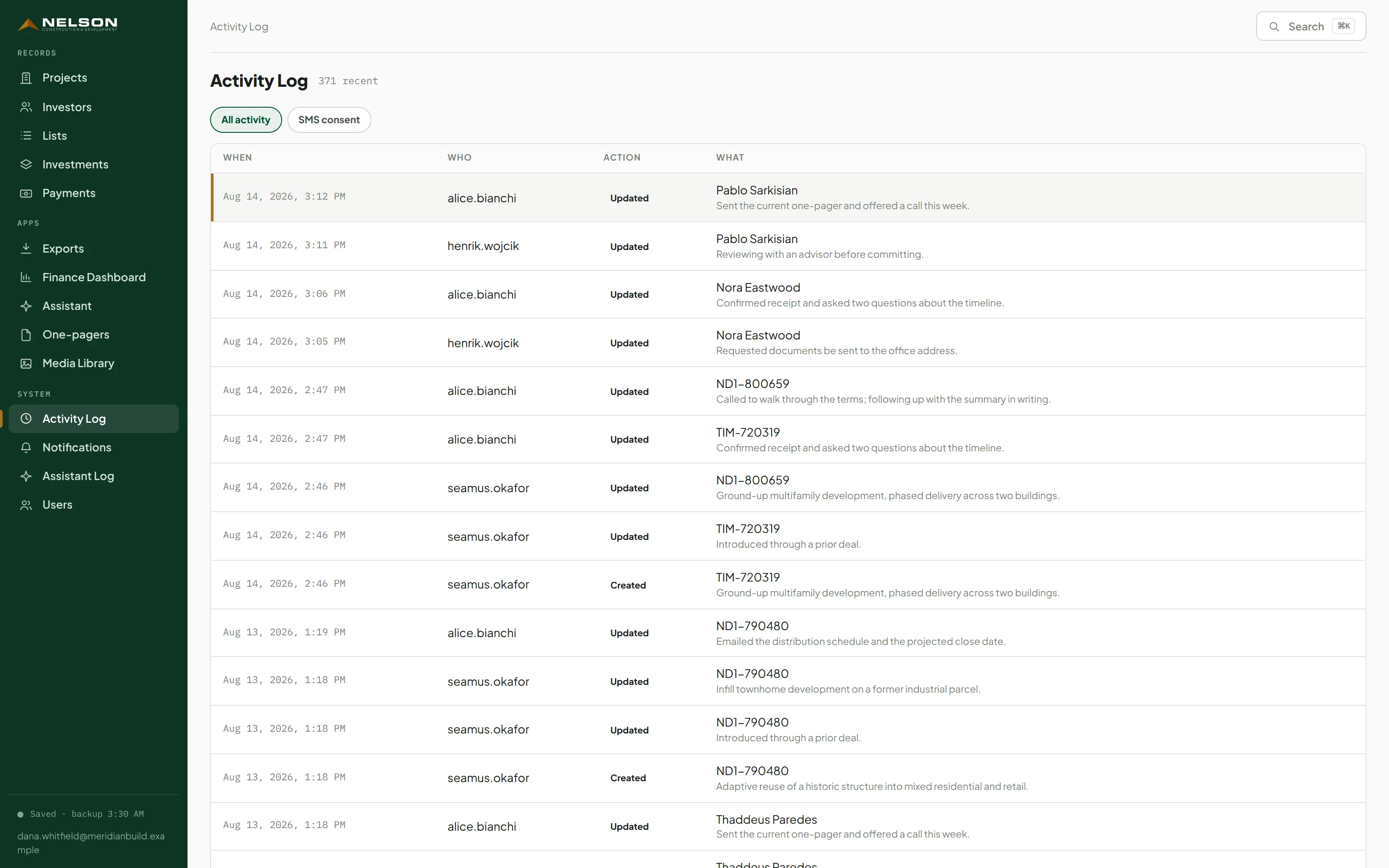
- Every change has a name on it. What changed, who changed it, when — which is what makes a financial record evidence.
What changed
- The book became one record. Investors, investments, payments and projects in one place, edited in one place.
- Audiences stopped going stale. A list is evaluated on open, so "who should get this" is current every time it is asked.
- The blind spot closed. Sends are recorded per recipient, so what went out and what was done with it is on the record.
- Answering a question stopped requiring a specialist. Anyone can ask the book something in plain language.
- The other tools stopped keeping copies. The tablet lookup, the offering pages and the media library all read this record, so there is no sync to break.