Investor Directory Real-estate development — investor relations 2026
One question, answered before the sentence asking it is finished.
A read-only lookup of the whole investor book, built for a tablet. Five keystrokes gives an investor's holdings and payment history. It reads the system of record rather than keeping a copy.

The problem
The firm's leadership asks one question more than any other, and almost never at a desk: what is this person in, and what have we paid them? Answering it meant filtering a spreadsheet-style database and cross-referencing payments by hand across several deals and several years — slow if you knew how, and a request to somebody else if you did not. There was no way to reach the system of record from an iPad.
It answers one question and refuses to do anything else
Nothing to configure. Nothing to edit. No workflow, no notifications, no permissions matrix, no settings page. Each of those costs a screen, a decision or a moment of loading, and the value of this tool is being faster than asking a person.
A record is a page about a person, not a database row
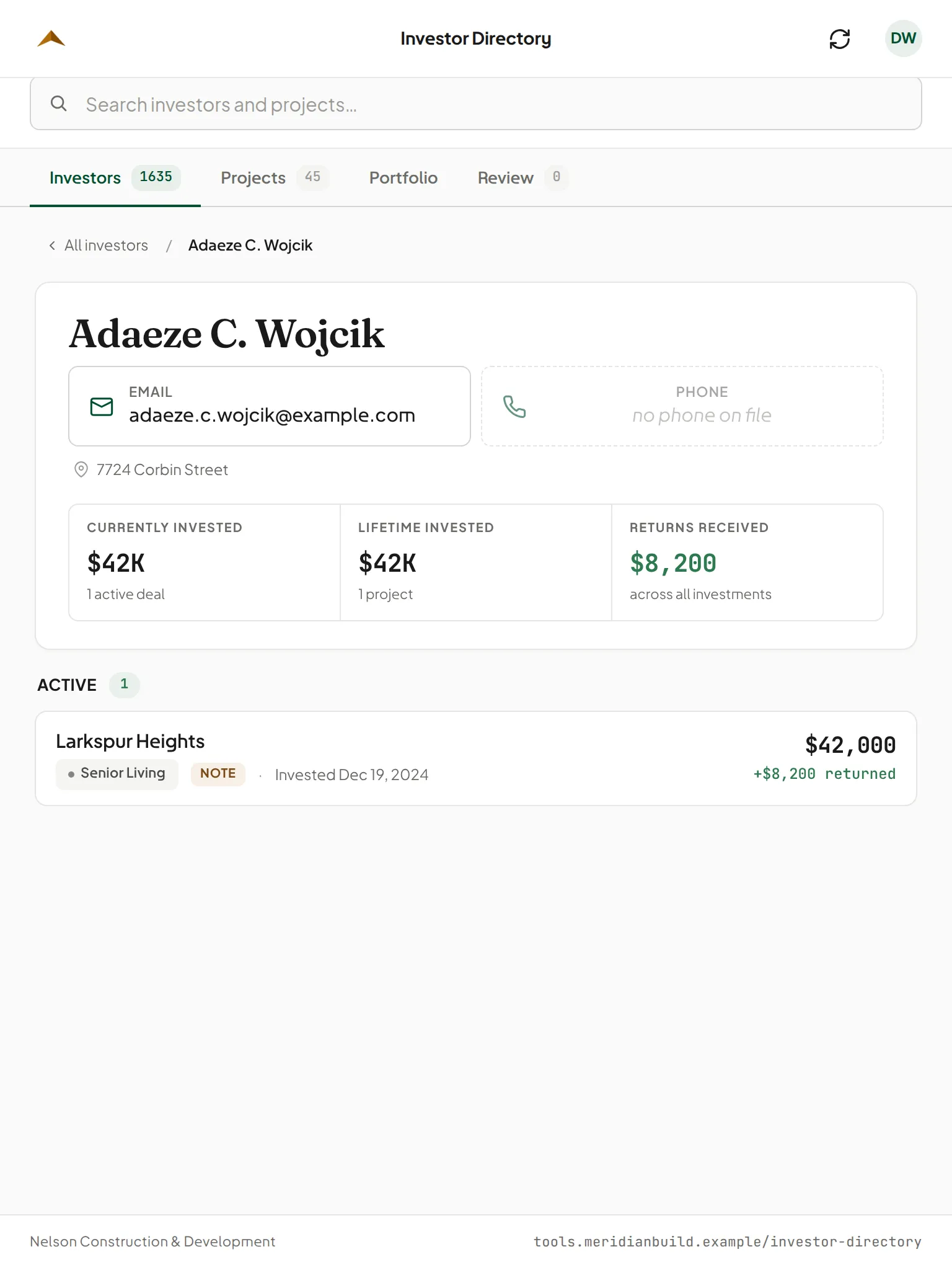
The first thing on screen is how to reach them — email, phone, address. Not their capital: a record is opened because somebody is about to be spoken to. Underneath sit three figures — currently invested, lifetime invested, returns received — then every investment: project, class of deal, when it was made, when it matures, the amount, and what has come back. Each opens to its own payment history.
The rest of it
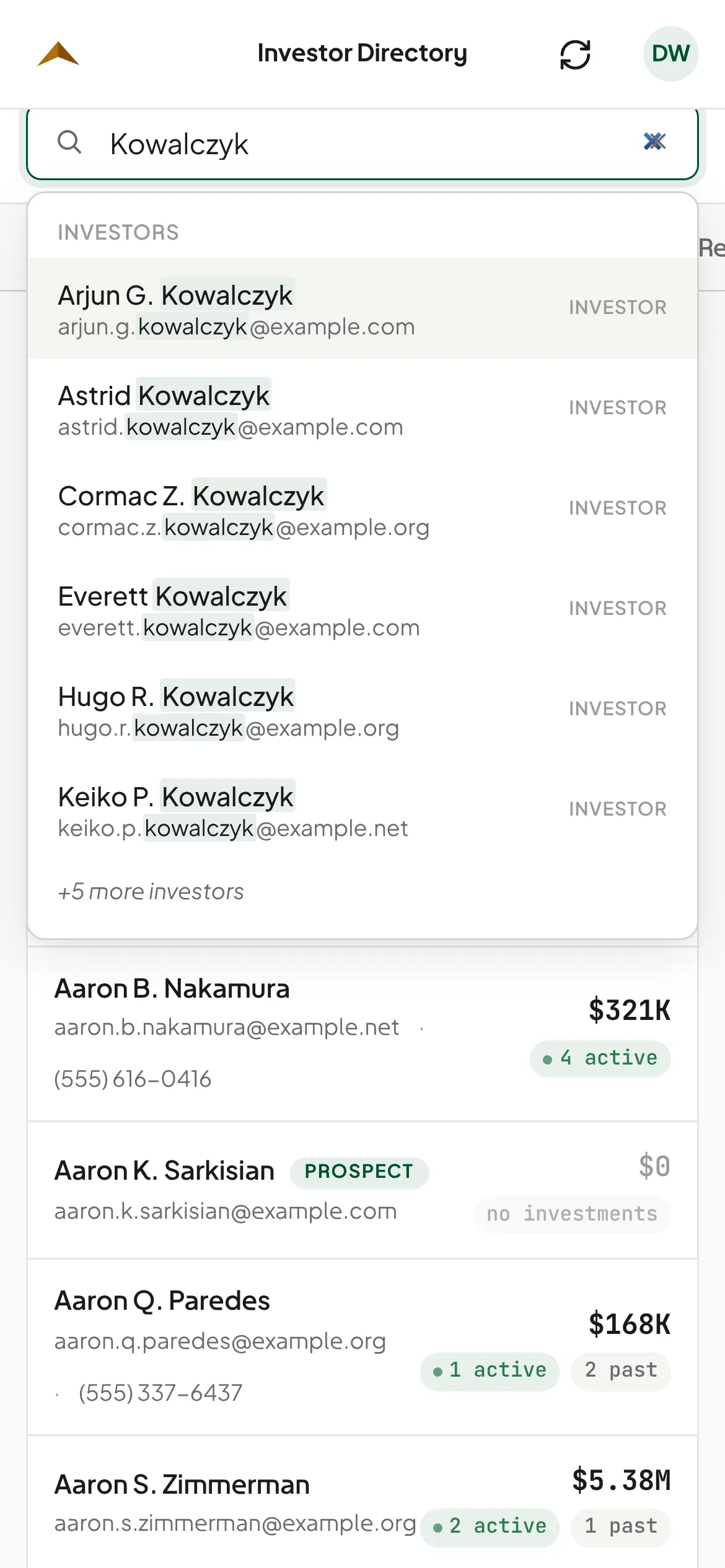
- Five letters and the answer is there. One box searches investors and projects together and narrows as you type. Part of a surname brings up the record: what is committed, what has come back, which deals are live and when the next note matures.
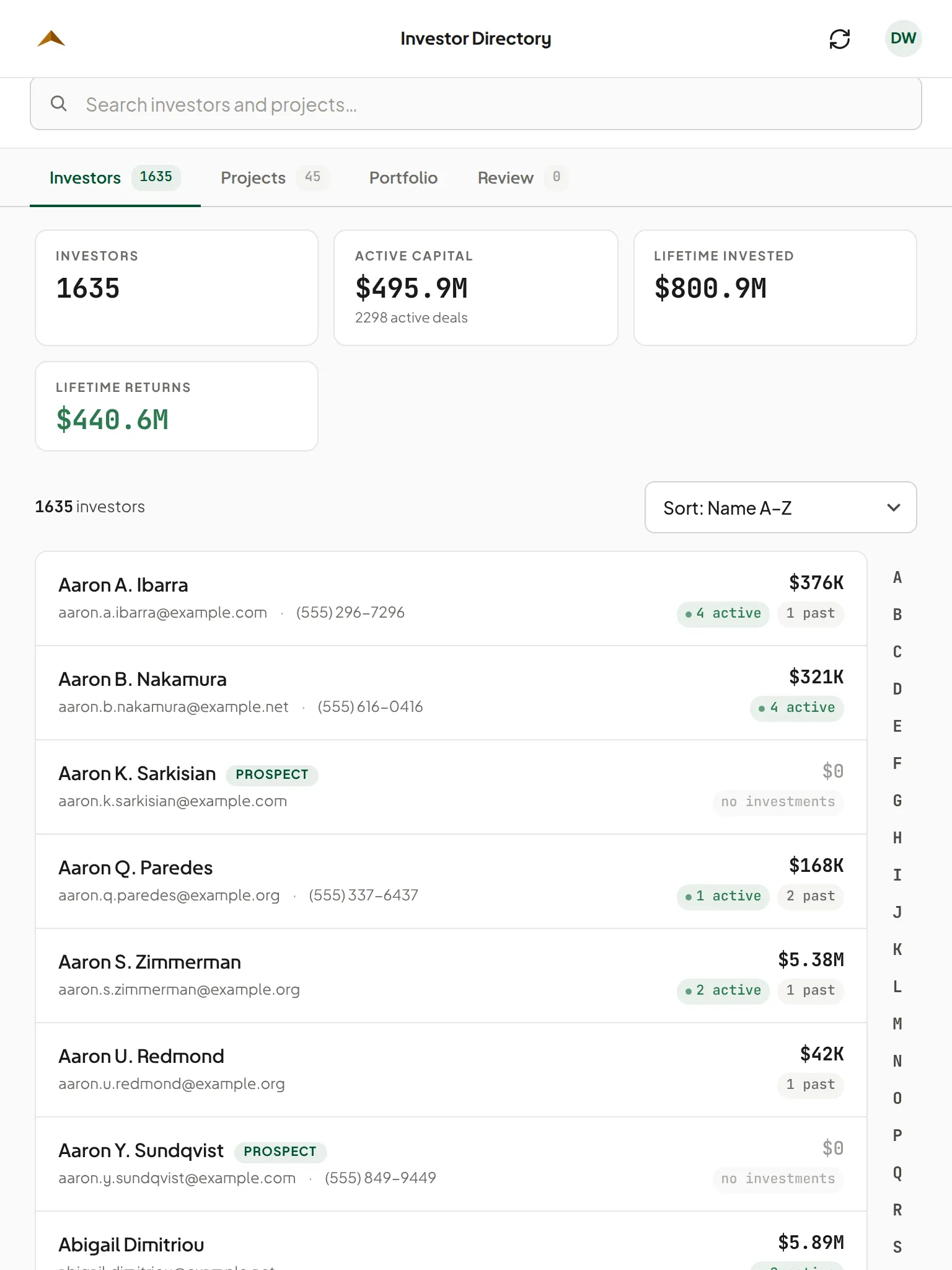
- The whole book. Every record with an alphabetical rail, each row carrying committed capital, live deals, closed deals and a flag when capital has come in unallocated.
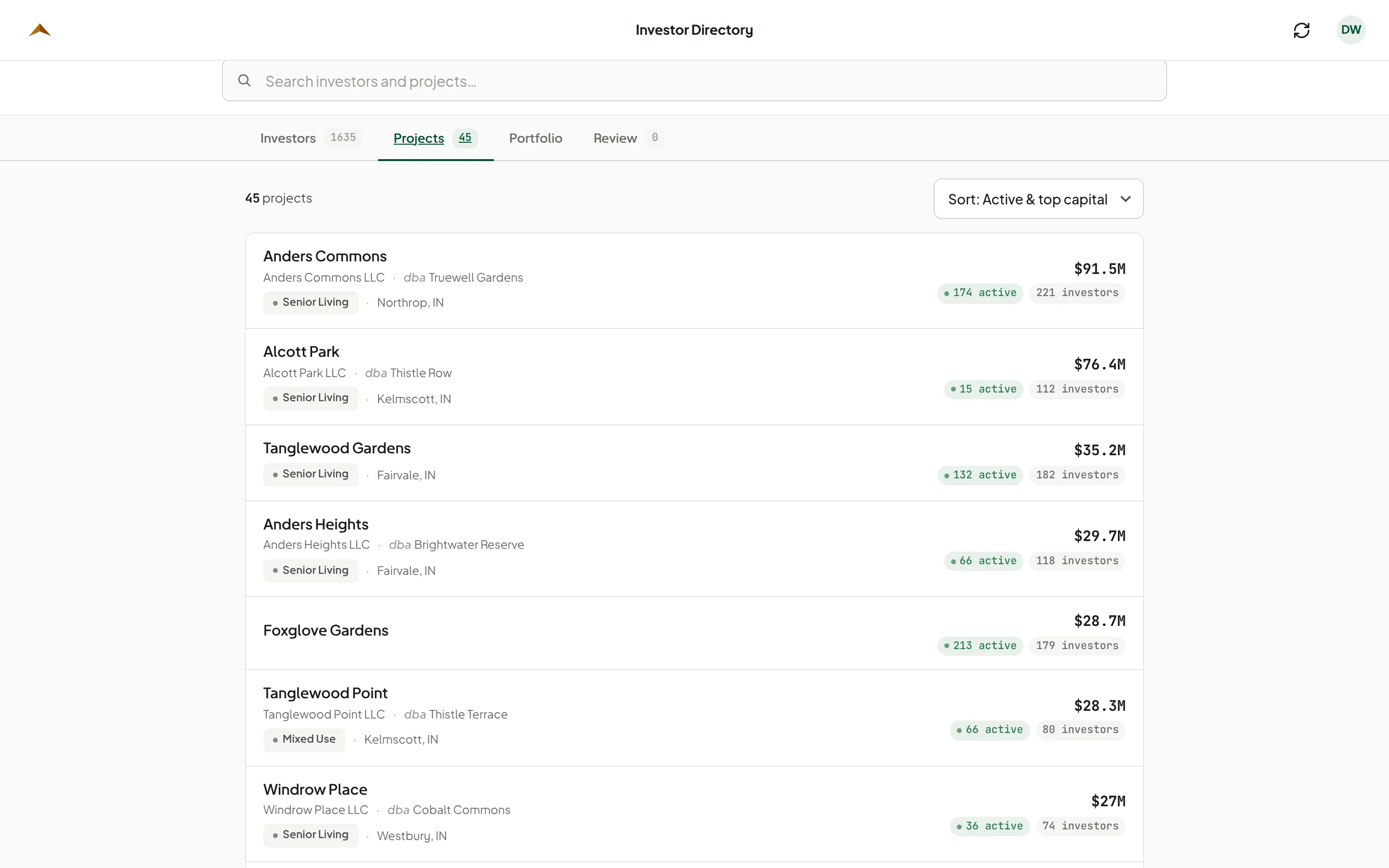
- The same capital from three directions. A person and their deals; a project and the capital behind it; the whole book at once, none of it needing a query, an export or a request to anyone.
- Set to be compared. Figures line up in columns down the page.
- It says when it does not reconcile. One tab holds records that do not add up, with the count on the tab. Zero is the normal state, shown anyway.
What changed
- A manual cross-reference became a lookup. Every investor, every active investment and every project, reachable on a tablet.
- The question stopped going through a person. Nobody pulls a report and nobody waits for one.
- There is one version of the truth. It holds no data of its own: it reads the system of record rather than copying it, so a correction made once is correct everywhere.
- Exceptions are visible rather than assumed. Records that do not reconcile are surfaced with a count, and the normal state is zero.