Stefan Hansen ← All work

The Newsletter Puzzle Construction and development — internal communications 2026

The clock only runs while you're looking at it.

An internal newsletter is a broadcast. It goes out, most of it goes unread, and there is no reason for anyone to open the next one. This is one: a monthly puzzle with a live leaderboard and a small prize, designed so that being busy never costs you the win.

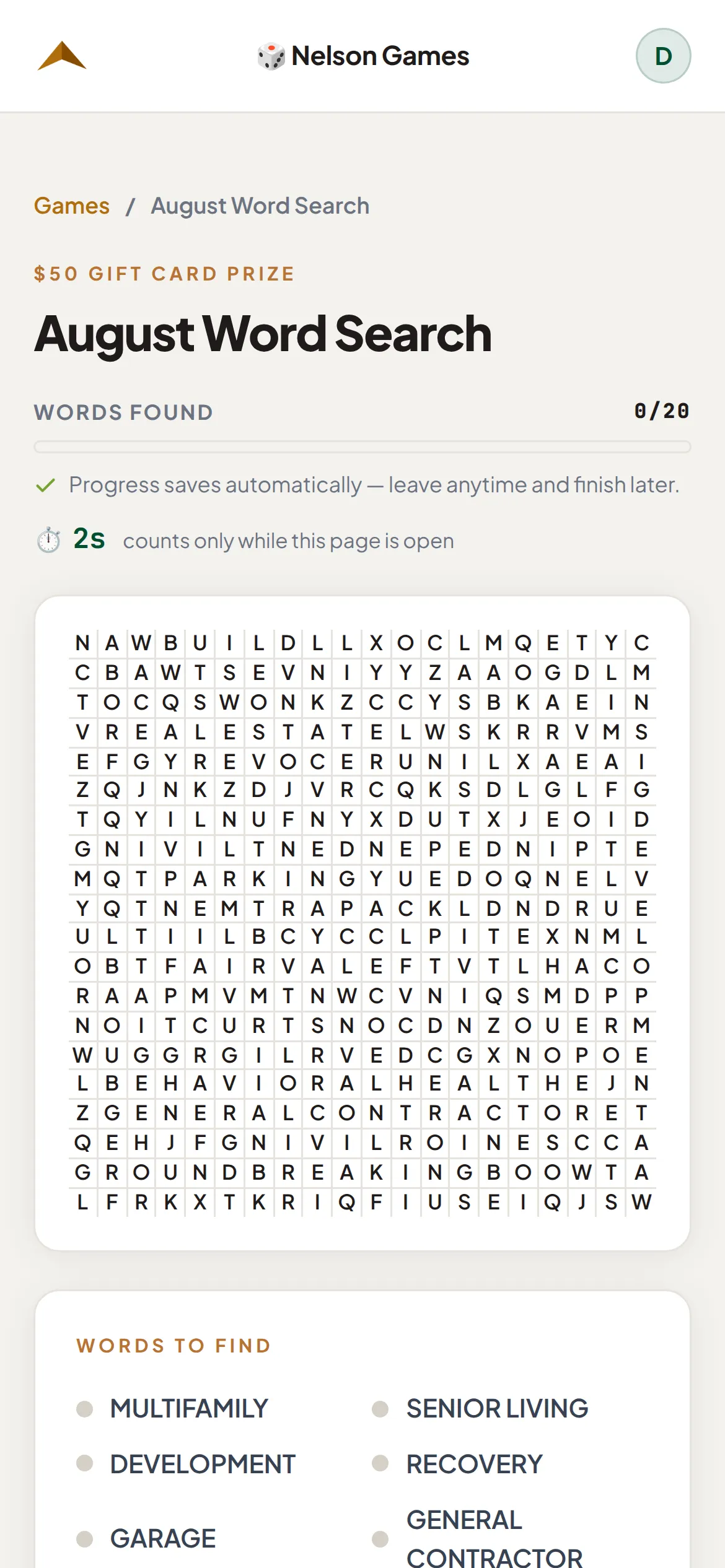
Solving: words dragged out of the grid, ticked off the list, timer running.
Cadence
One puzzle a month
Grid
20×20, twenty words, all eight directions
Prize
A gift card, to the fastest solve
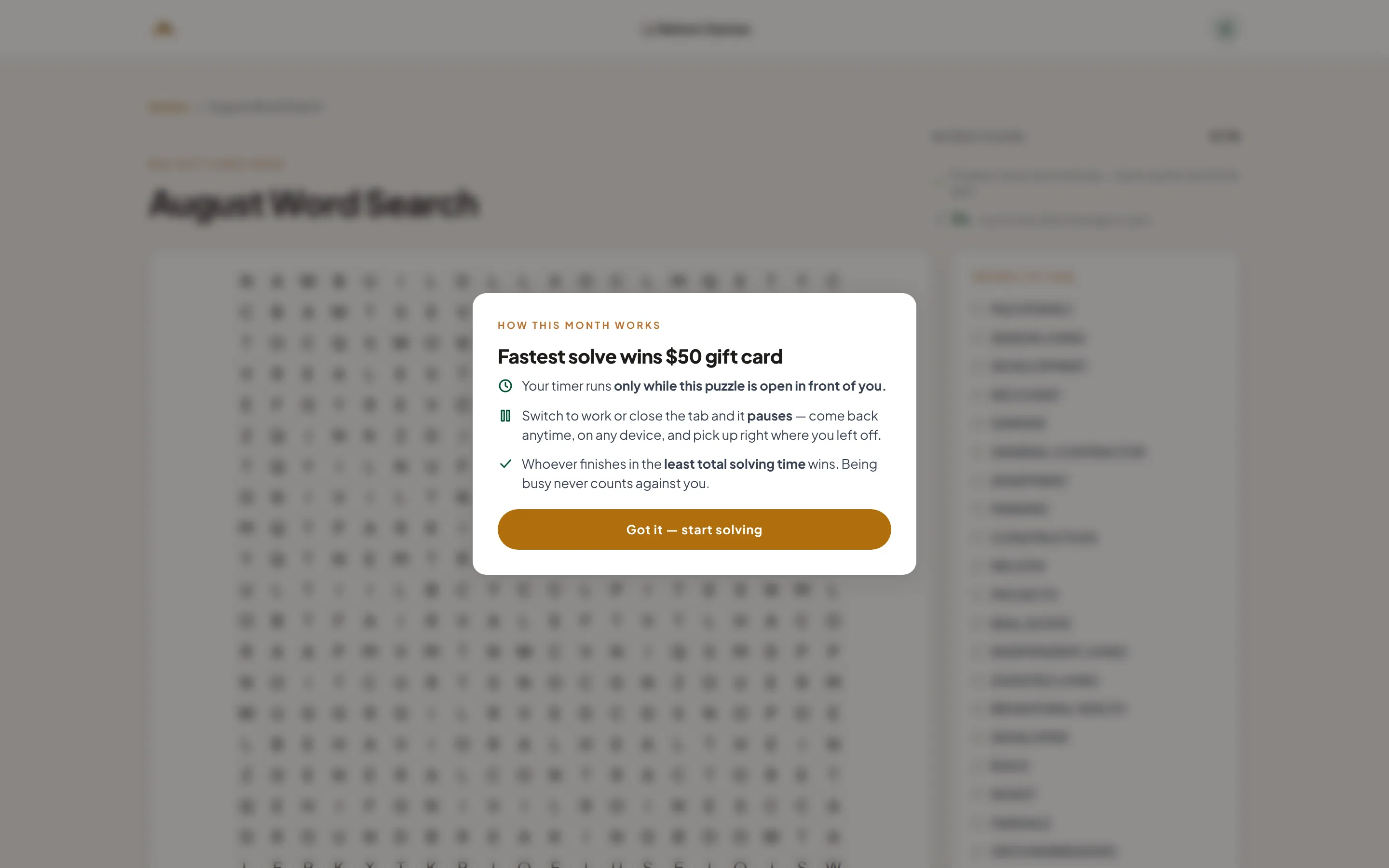
Cost of being in a meeting when it arrives
Nothing
People who have played
[X]

Role

Concept · Product direction · Brand and visual design · Interface design · Build direction

Client

A real-estate development firm

Origin

Self-initiated. The alternative was the monthly company newsletter continuing to go out as a broadcast that most people never opened, with no reason for anyone to open the next one.

The problem

A company newsletter is a broadcast: it goes out, most of it goes unread, and nothing about this month's edition gives anyone a reason to open the next one. The usual responses are cosmetic — a better subject line, a shorter format, a note from someone senior at the top. All treat the symptom rather than the cause, which is that there is nothing in it that is for them.

Behind that sits a second problem. People in different parts of a construction and development business — site teams, accounting, the development side — have almost nothing to talk to each other about that is not a project. That is structural, and it quietly makes one company feel like three.
Nobody was going to fund a solution to either. This is the smallest possible one, self-started and attached to the thing that already went out every month.

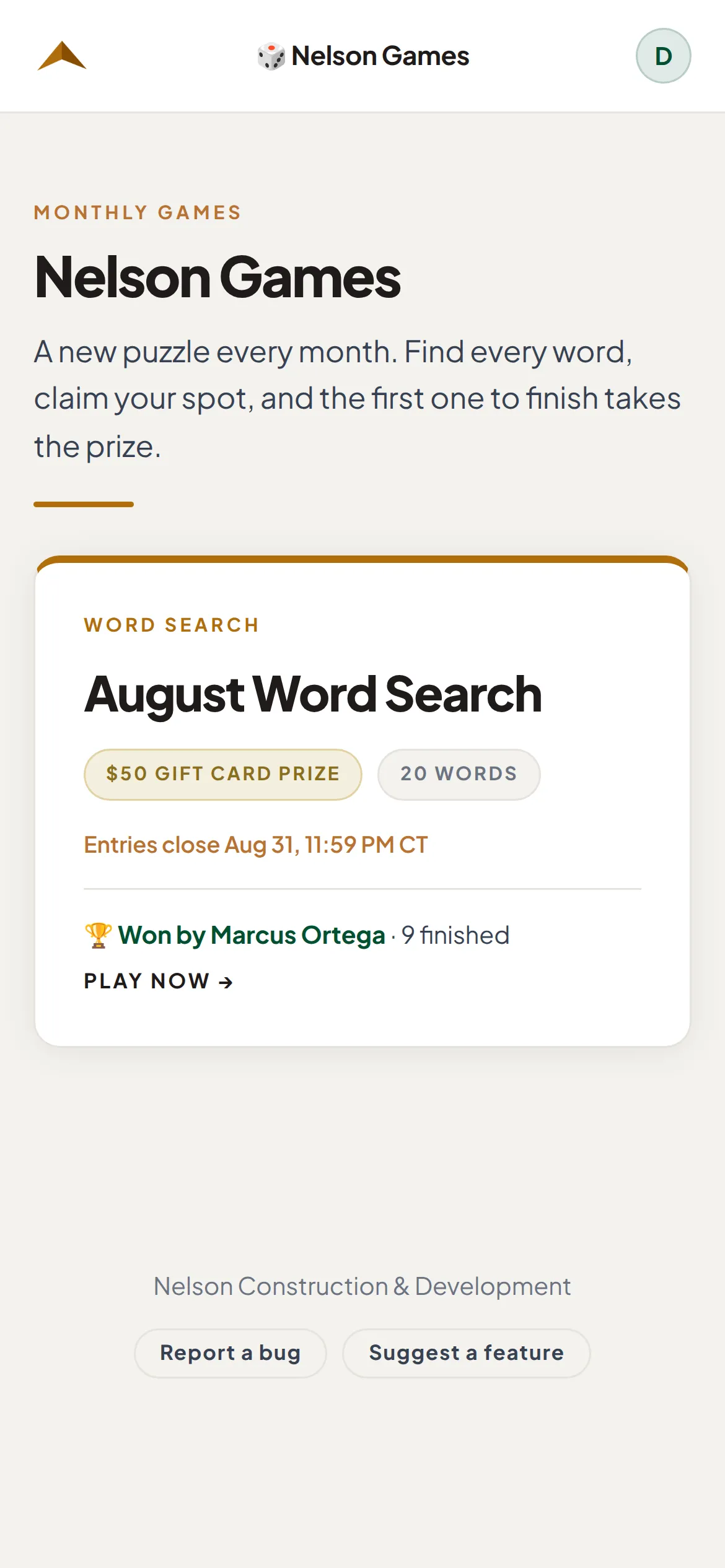
This month's game: the prize, the word count, who won and how many people finished.

A game is a reason to open the email

A word search, once a month, linked from the newsletter: twenty words in a twenty-by-twenty grid, hidden in all eight directions including backwards. The fastest solve wins a small prize.

It costs almost nothing to run and takes five minutes to play, and it gives people in different parts of the company something to talk about that is not a project — always the actual objective.

The rule that makes it fair: the timer only runs while the puzzle is open.

The clock only runs while you are looking at it

If the timer started when you opened the link, whoever happened to be free when the newsletter arrived would win every month. Everyone else — in a meeting, on a site, on a call — would open it, see they had already lost, and close it.

So the timer counts attention rather than elapsed time. Switch to your work and it stops; close the tab and it stops; come back tomorrow, on a different device, and it picks up exactly where you left it. A solve typically spreads across a working day in three or four sittings, a few minutes at a desk and a few more on a phone, and only the minutes on the grid count.

Being busy costs you nothing. The person on a site with four spare minutes twice a day competes on equal terms with somebody at a desk. The interface says so plainly, before you start — a rule about fairness only works if everybody knows about it.

The board: a 20×20 grid, the word list beside it, and a timer that counts only attention.

The rest of it

  • Nobody loses a half-finished grid. Progress saves by itself, continuously, so a partly-solved grid is picked up where it was left on whatever device is to hand — there is no point telling people they can come back later if coming back later means starting again.
  • The leaderboard is company-wide. It shows who has finished and ranks by total solving time, the finish is claimed at the end, and it is where people find out who else plays.
  • A new month is a row, not a release. Each month's game is a single record with the puzzle inside it — title, prize, release date, grid — so a new one takes minutes and needs nobody technical. The effort of the next edition has to be near zero, or the next edition does not happen.

What changed

  • The newsletter has a reason to be opened. Something in it belongs to the reader rather than to the company, arriving on a reliable monthly cadence.
  • Being busy stopped being a disqualification. The timer counts attention, not elapsed time, so the competition is genuinely open to people whose day is not their own — which is most of a construction business.
  • Nothing is lost between sittings. Progress saves continuously and follows you across devices, because a rule that says "come back later" has to be true.
  • The next edition costs minutes. A month is a record, not a release, so the thing is still running rather than having quietly stopped after the third one.
  • People in different parts of the company have something to say to each other. [X] people have played.