Apparel Orders Construction — internal operations 2026
One field decides the route, and the person approving never has to log in.
An internal store for company clothing. Orders route to the right supervisor for approval by email, with no account to create, and every order carries its own state. It replaced a catalogue PDF passed around by email.
The problem
Everybody at a construction company wears the company's clothing, and every few months everybody needs more of it. A catalogue went out as an email attachment, was filled in or answered with a paragraph, then forwarded to a supervisor for a yes and forwarded again to whoever places the order. A document passed around by email has no state, so orders vanished between the approval and the person placing them.
One field decides the route
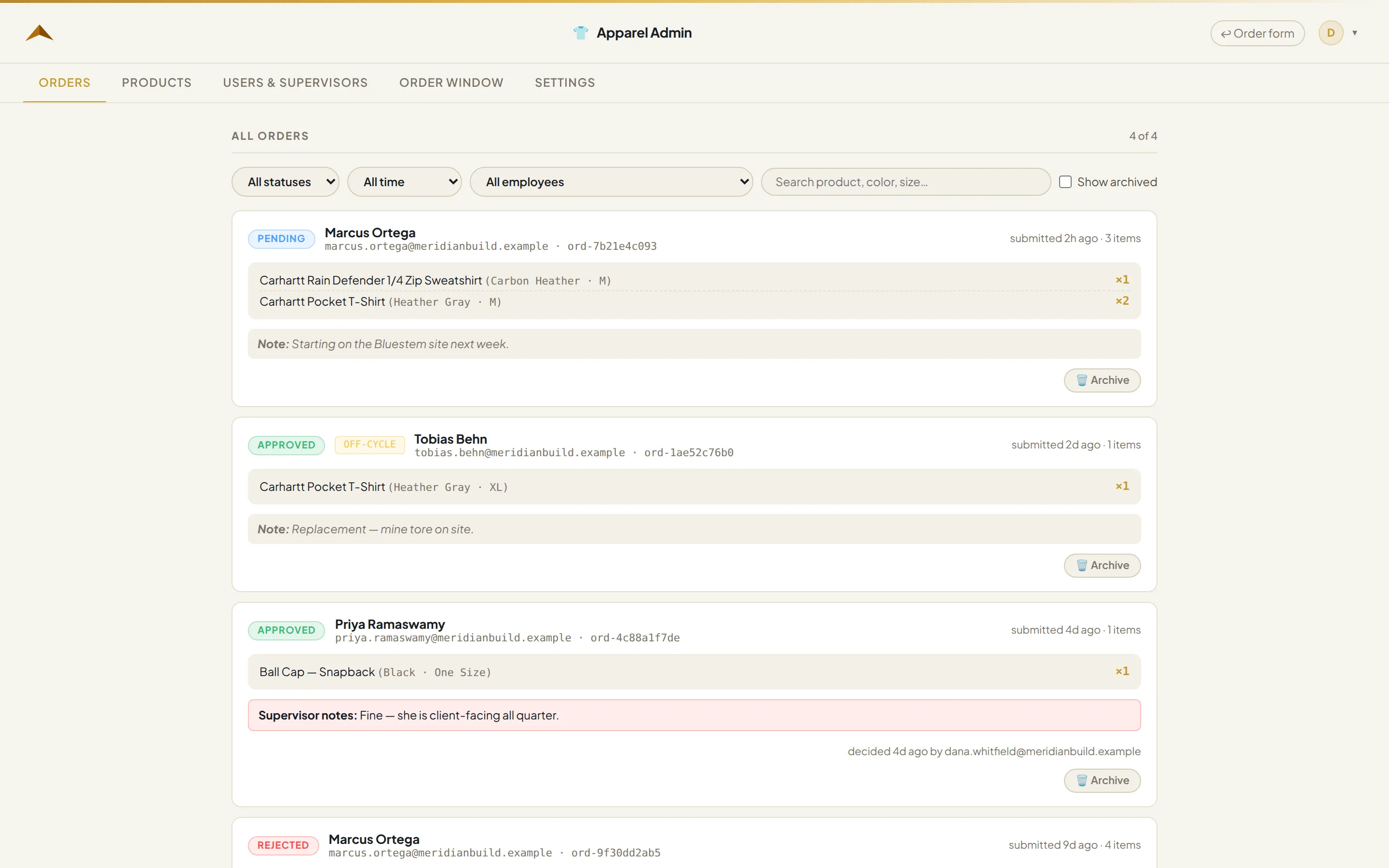
There is no approval matrix and no workflow builder. Each employee record carries an optional supervisor, and that is the whole configuration. When an order is submitted, the tool reads that one field: with a supervisor, the order is held and sent to them for a decision; without one, it goes straight to whoever places orders. When the company changes, somebody edits a field.
The person approving never logs in
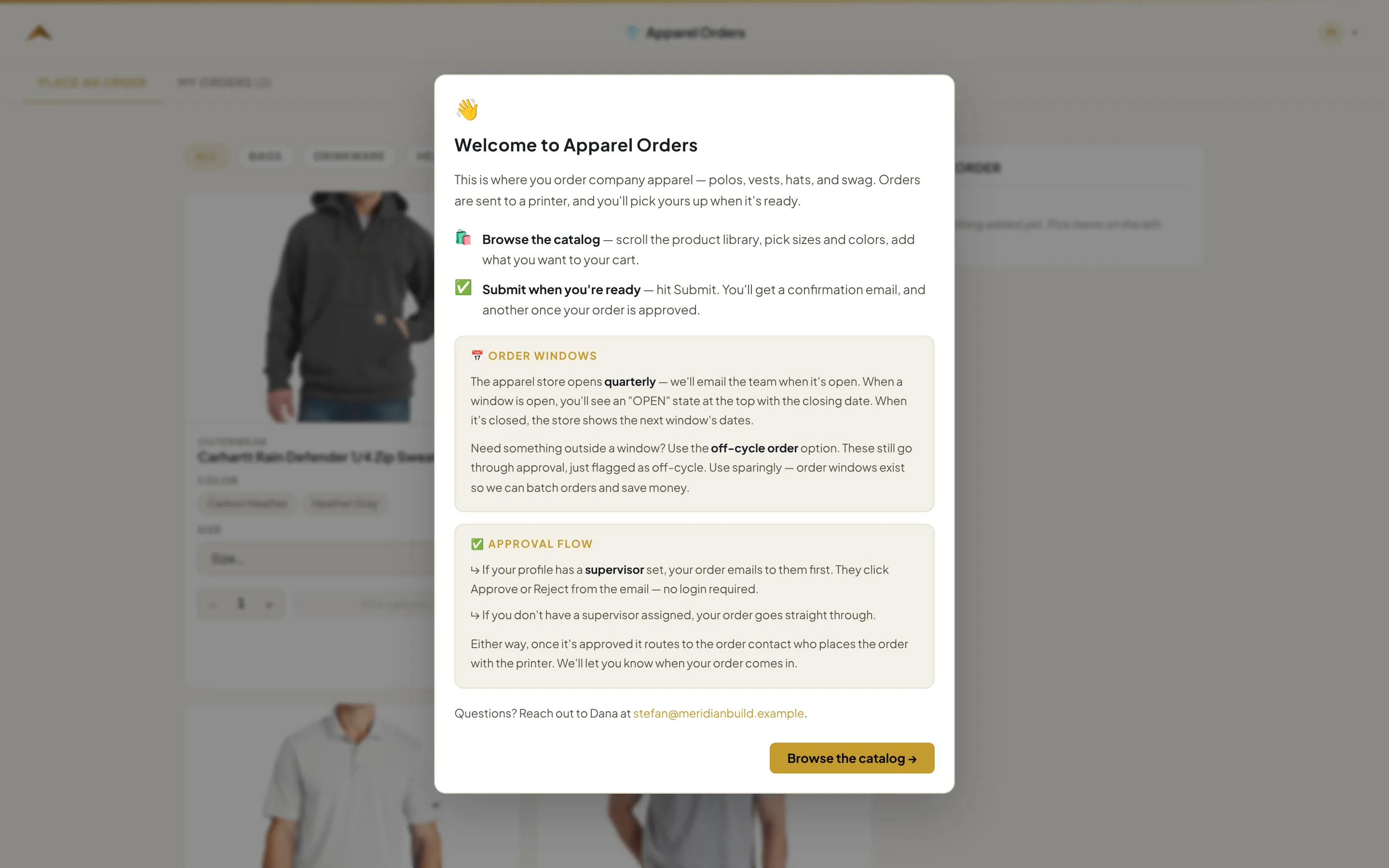
A supervisor uses this a few times a year, so there is no account and no password to hold. The approval arrives as an email with a link in it.
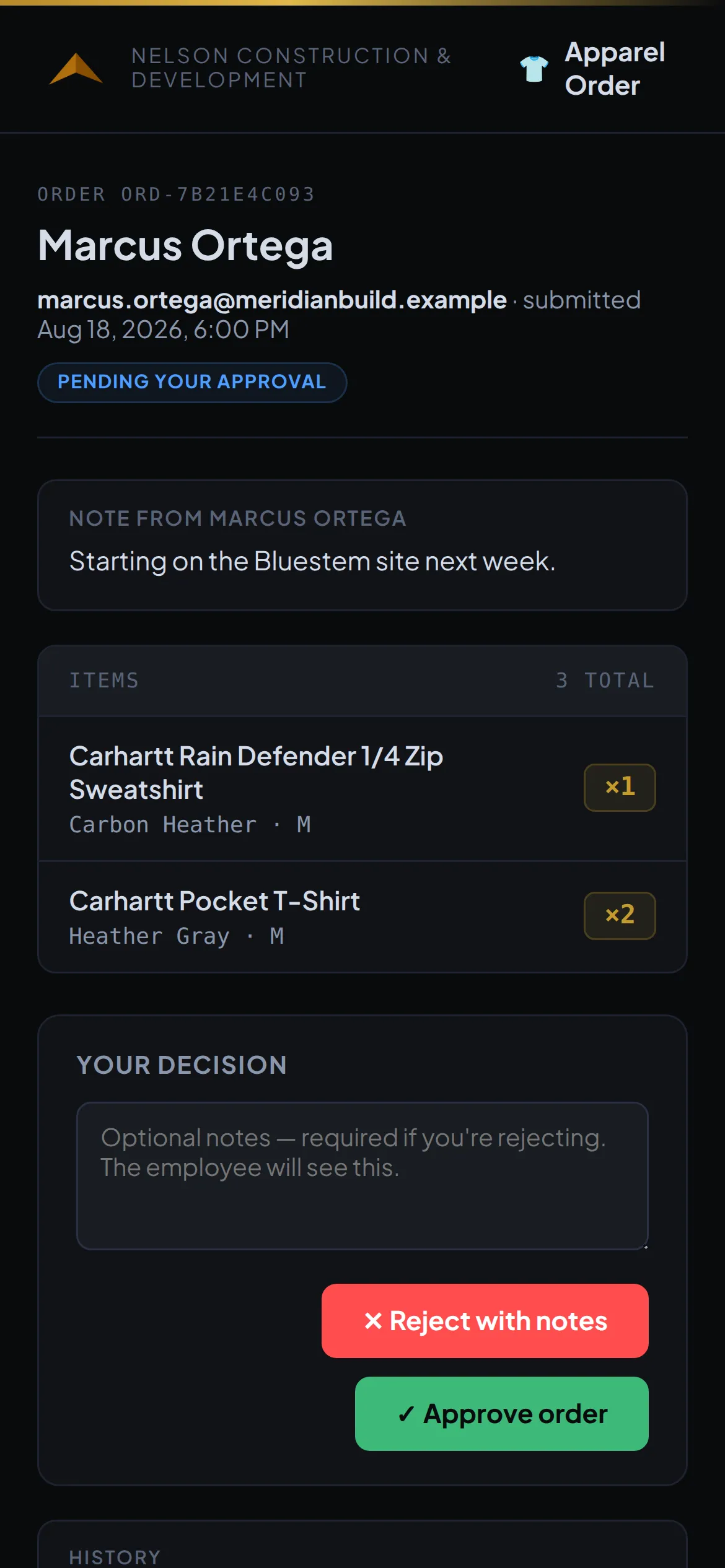
The link opens a page showing the order, the note the employee wrote, and the items with their colours and sizes, with two buttons: approve, or reject with a reason. It is unguessable, expires by itself, and can only decide the one order it was made for.
The rest of it
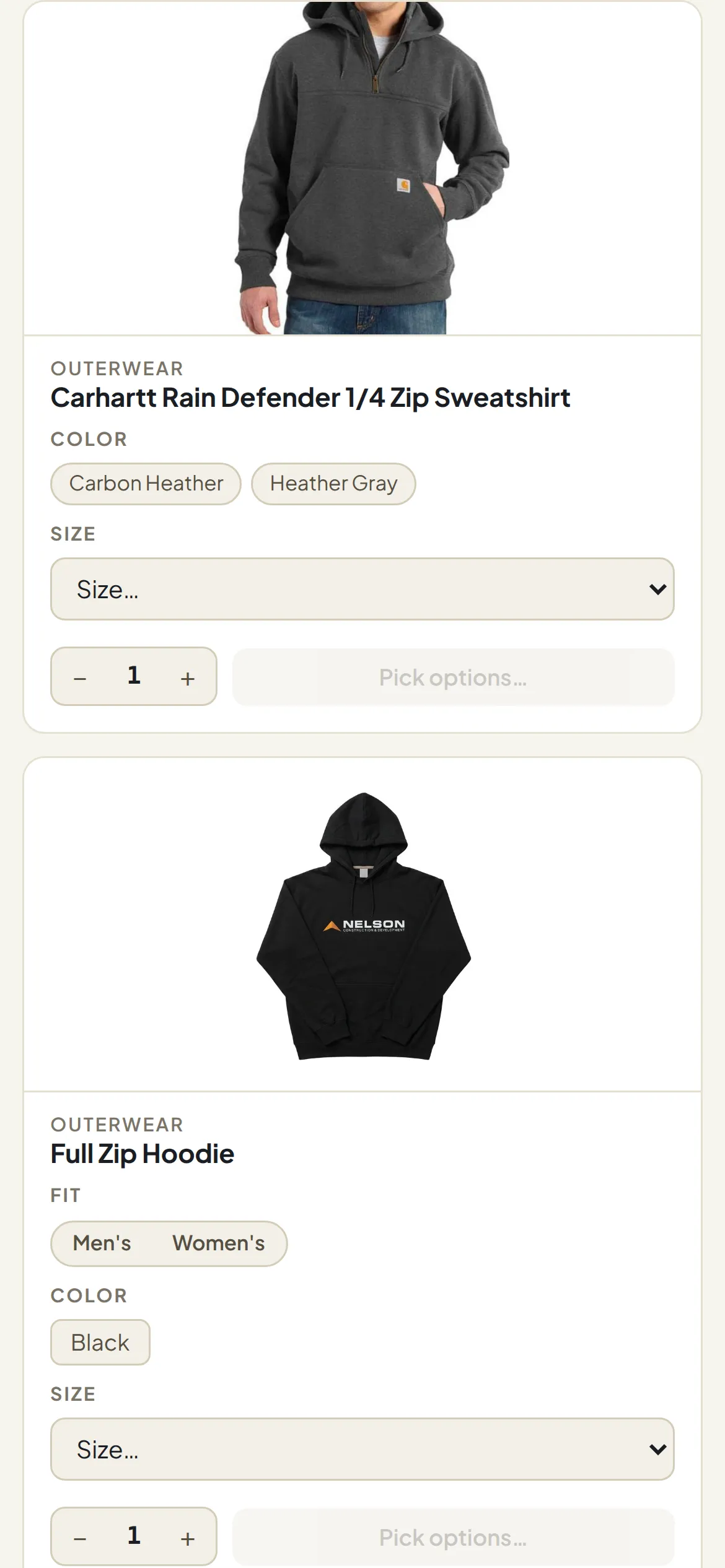
- It is a shop, not a form. The store shows what is available, photographed properly, with the colours and fits that exist and the sizes in stock.
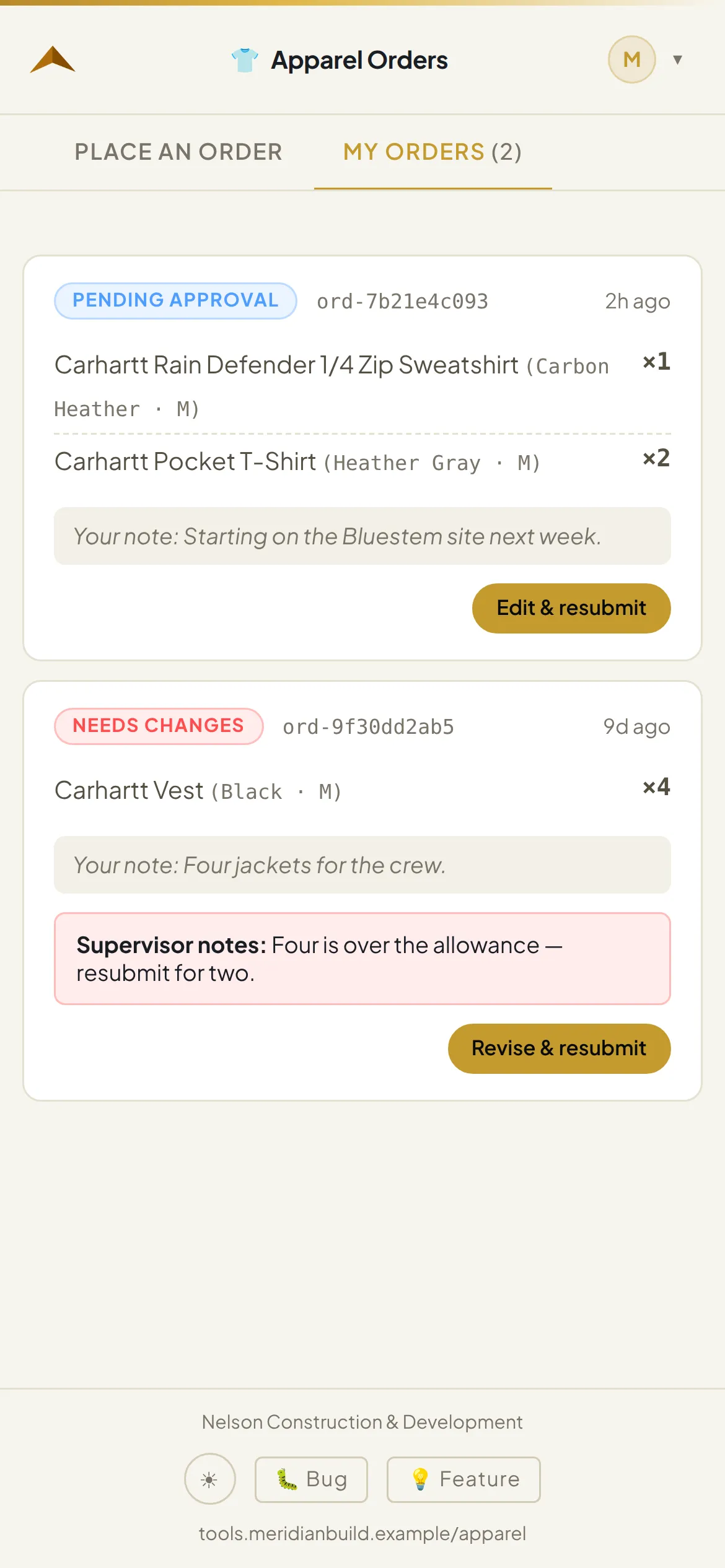
- A rejection is not a dead end. A reason is required and goes back attached to the employee's own order, to be revised and resubmitted from there.
- Approved orders route onward by themselves to the person who places orders, with a copy to whoever else needs it — the step where things used to be lost.
- Every state change is on the order. Submitted, approved, rejected, resubmitted, each with who did it and when.
- Batching is the default, not a rule. Ordering at once saves real money with the printer, so the store opens on a schedule and closes again, and off-cycle orders stay possible.
What changed
- The process gained a state. Every order says where it is — pending, approved, needs changes — with a history of who did what and when.
- The approval stopped needing an account. A signed link that expires, no login.
- Nothing is forwarded by hand.
- Sizes stopped being typed. They are selected from what actually exists, which removes an entire category of reorder.
- Rejections became useful. A required reason, attached to the order, with a revise-and-resubmit path.
- Batching held. Windows are the default and off-cycle requests stay possible and visibly marked.